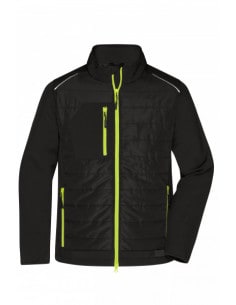
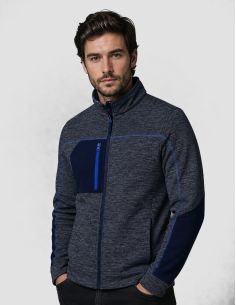
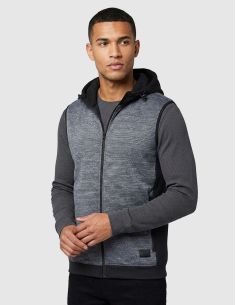
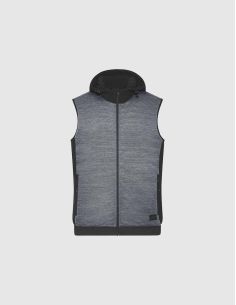
Men's 4-Season Recycled Softshell Jacket -10°C — James & Nicholson JN1180
Protection Wind, water, cold
Use 4-season · City & outdoor
Thermal Protection Down to -10°C*
Technology 3-layer TPU membrane
Softshell TPU — 10,000 mm waterproof — 5,000 g breathable — Recycled polyester
The 4-season recycled softshell that blocks wind and rain without making you sweat
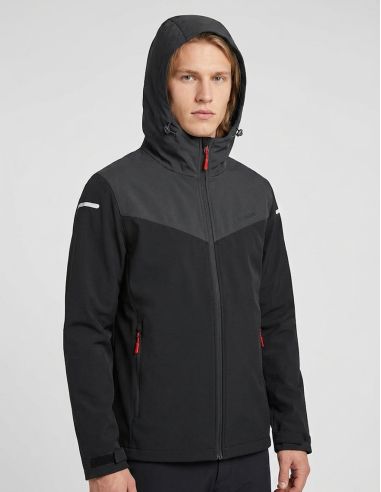
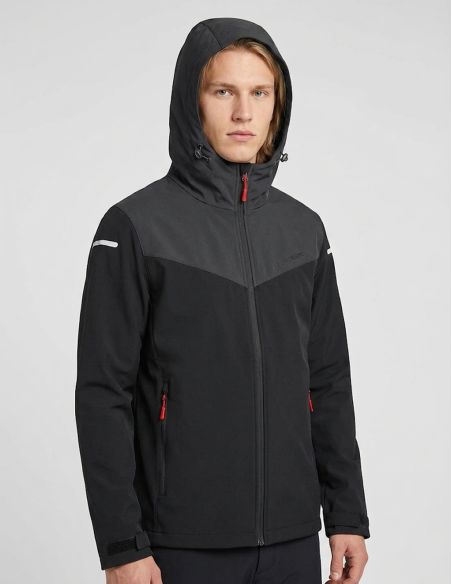
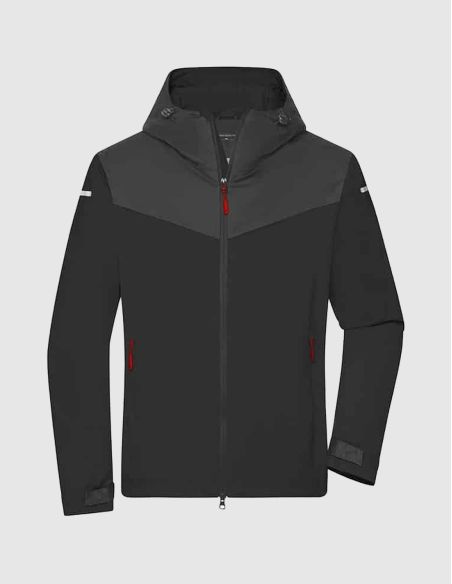
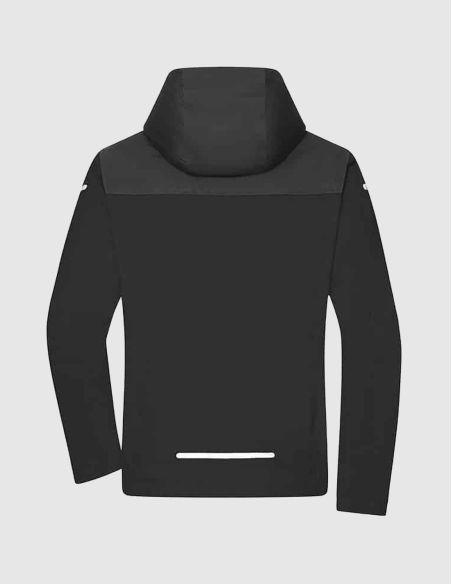
Made from 100% recycled polyester (from PET bottles), this softshell jacket pairs a 3-layer TPU membrane that is waterproof (10,000 mm) and breathable (5,000 g/m²/24h) with a light mesh lining. Windproof and water-repellent, with taped seams, an adjustable lined hood, adjustable cuffs and reflective details: 4-season protection, warm down to -10°C with the right layers.
The Grand Froid Verdict
"A truly versatile softshell: the 3-layer TPU membrane blocks wind and rain while letting you breathe, and the 100% recycled polyester makes it a responsible choice with no technical compromise.
We like it from spring to winter: on its own in mid-season, as an outer layer in the cold. The reflective details and YKK zips add safety and durability. Ideal for outdoor work, walking, cycling and city commutes."
When to wear this jacket?
- in mid-season and mild winters, on its own
- in wind, light rain or drizzle
- for outdoor work
- for brisk walking, hiking or cycling
- for commuting and city wear
- as an outer layer (3rd layer) in deep cold
Thermal protection
This softshell can suit temperatures down to -10°C* in appropriate use, with a coherent layering combination. It is first and foremost a windproof, water-repellent outer layer: it blocks wind, sheds light rain and retains the warmth of the layers underneath. Real performance depends on wind, humidity, exposure time, personal sensitivity and above all the quality of the layers.
How to use it well in winter?
Pour un usage par températures négatives, adoptez un système 3 couches :
- 1st layer: a breathable thermal base layer
- 2nd layer: a fleece or light insulating down jacket
- 3rd layer: the softshell as outer protection
Technical features
- 3-layer TPU membrane — 10,000 mm water column
- Breathability 5,000 g/m²/24h
- Taped seams and YKK zips
- Adjustable lined hood
- Velcro-adjustable cuffs
- 2 zipped side pockets + 1 inner pocket
- Napoleon/access opening (for decoration)
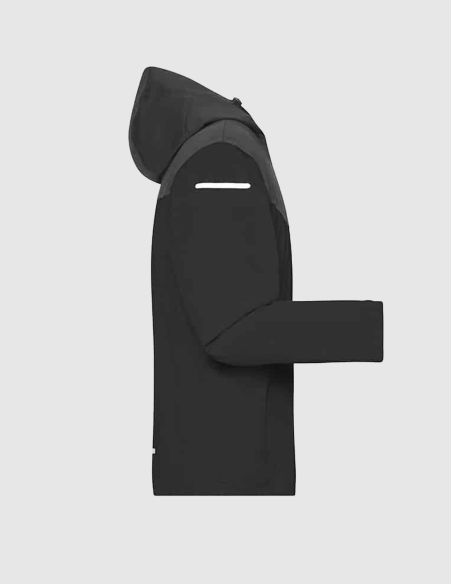
- Reflective details on sleeves and back
- Mesh lining 100% recycled polyester
- Classic cut, dropped back hem · 280 g/m²
Responsible approach
This jacket is made from 100% recycled polyester from PET bottles, for a lighter footprint with no loss of performance. Note: recycled textiles are not re-dyed — some colour variation may appear between production runs.
Standards & commitments
- REACH — EU chemical compliance
- Amfori BSCI — social production standards
- Triman — sorting instruction
- Recycled material — polyester from PET bottles
Size guide & fit advice
The jacket has a classic cut with a dropped back hem. For city use or with a thin base layer, take your usual size. To layer a fleece or thicker mid-layer underneath, size up to keep freedom of movement.
| Garment (cm) | S | M | L | XL | XXL | 3XL |
|---|
| A — ½ chest |
55 |
58 |
62 |
66 |
70 |
74 |
| B — ½ hem width |
52 |
55 |
59 |
63 |
67 |
71 |
| C — Front length (shoulder) |
70 |
72 |
75 |
78 |
80 |
82 |
| D — Back length (shoulder) |
72 |
74 |
77 |
80 |
82 |
84 |
| E — Sleeve length |
66 |
67 |
69 |
71 |
72 |
73 |
Care instructions
- Wash: machine at 30°C, gentle cycle
- Close all zips before washing
- No fabric softener (it harms water-repellency)
- Dry: line dry, or tumble dry low to reactivate water-repellency
- Do not dry clean
General softshell care — please refer to the product label.
Why choose a recycled softshell jacket?
A recycled softshell jacket combines three rarely-together qualities: wind and rain protection, breathability under exertion, and a responsible approach thanks to polyester from PET bottles. Versatile across 4 seasons, it suits outdoor work, outdoor leisure and city commutes, on its own or as the outer layer of a 3-layer system.
* Indicative temperature depending on activity, personal sensitivity, wind, humidity and the layering system used.