


Your cart
There are no more items in your cart

An outfit suited to extreme cold must protect you without making you sweat during the planned activity. The choice also depends on the wind, the humidity and the time spent outdoors or in a cold room.
Key takeaways
- Air temperature alone does not describe the cold the body actually experiences.
- Physical activity calls for an outfit that wicks away the moisture produced by sweating.
- Wind speeds up heat loss, especially on exposed areas.
- A fit that is too tight reduces the insulating air and can restrict work movements.
Why buying an extreme cold outfit is not just about temperature
To buy an extreme cold outfit, you first need to define the real exposure conditions: duration, wind, humidity and level of exertion. The same temperature can be bearable during an active walk and hard to endure during stationary work. The displayed temperature is therefore a reference point, not a sufficient criterion.
The body produces heat when it moves. When you stop, this production drops and your clothing has to do more to limit heat loss. Wind passes through or compresses some materials, while moisture removes insulating air from textiles. We recommend noting the waiting periods, the journeys and the time spent in sheltered areas before choosing a parka or trousers.
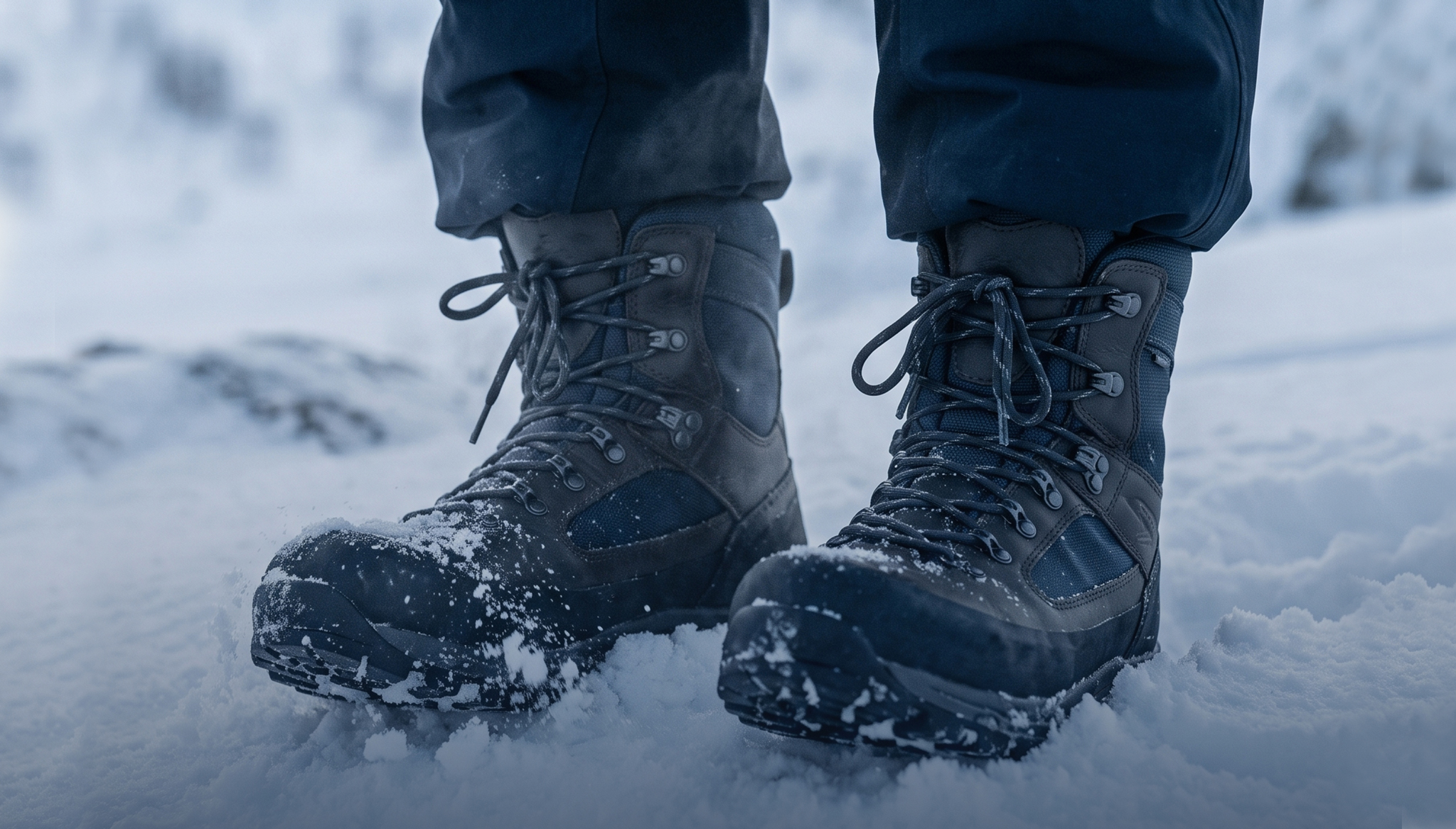
High-top lace-up boots designed for snow protect the feet from cold and moisture
Someone who works outdoors does not have the same needs as someone heading back to a vehicle after a hike. Protection must also cover the extremities, because hands and feet cool quickly when blood circulation decreases in the cold.
How activity and hot-cold transitions change your needs
Activity determines the level of insulation required and how well the garment needs to manage sweat. Stationary work calls for more retained heat, while physical exertion requires better moisture wicking. Moving back and forth between a heated room and the outdoors calls for layers that are easy to adjust.
During exertion, an outfit that is too warm makes you sweat. If this moisture stays against the skin, it cools the body as soon as activity slows down. A breathable base layer helps move moisture towards the outer layers.
For a stationary job, the air trapped in an insulating layer provides useful protection. In a cold room, you also need to consider the length of each task and the breaks taken away from the cold. The conditions of a polar trip can help inform this choice when exposure lasts several hours.
The layers of an extreme cold outfit and their role
An extreme cold outfit works by layering, because each layer meets a distinct need. The layer next to the skin manages moisture, an insulating layer retains heat and the outer layer holds back wind and precipitation. The whole outfit must remain suited to the level of activity.
Thermal underwear should stay close to the body without compressing it. Its role is to keep the skin drier. A fleece or a padded garment adds insulation depending on how cold it feels.
The parka, jacket or outer trousers form a barrier against the elements. Their material must match the expected exposure. A water-resistant membrane is useful in wet snow, but it does not replace an insulating layer when you stay still.
How wind and moisture affect how cold you feel and how materials perform
Wind and moisture can cool the body faster than dry, still air. Wind drives away the warm air around the garment, while moisture reduces the insulation of textiles. This is why the choice of materials always depends on the conditions you will face in the field.
A windproof outer layer limits the flow of cold air around the body. In cold rain or wet snow, a water-resistant material protects the insulating layers. However, you should check its breathability if the work involves sustained effort.
Gloves and footwear need the same attention. Wet hands quickly lose thermal comfort. Suitable footwear must insulate from the cold ground and keep the foot dry without hindering walking.
What an extreme cold outfit cannot do, despite manufacturers’ claims
An extreme cold outfit cannot eliminate the effects of prolonged exposure or make up for poorly fitted equipment. No garment provides lasting protection if the wearer stays damp, if the extremities are uncovered or if conditions exceed the use intended by the manufacturer.
A warm parka does not replace suitable gloves when your hands are handling cold tools. Nor does it protect against the risks of slippery ground or fatigue that reduces precise movements. Manufacturers’ information is useful for comparing products, but it should be read with the actual activity in mind.
We also recommend distinguishing between thermal protection and professional protection. A garment can insulate against the cold without meeting the requirements of a job that calls for high visibility or specific resistance. Job requirements should be checked before buying.
Check the fit and freedom of movement before buying
Before buying an extreme cold outfit, check that it leaves enough room for your layers and your work movements. A close fit without compression retains insulating air better. Your arms, knees and shoulders must be able to move without pulling on the garment.
Try it on with the layers you plan to wear under the jacket or trousers. Raise your arms, crouch down and walk to spot any discomfort. A sleeve that is too short exposes the wrist when you stretch your arms, while trousers that are too long can catch on the ground.
Zips, hoods and cuffs also serve a practical purpose. A hood should protect without reducing your useful field of vision. Adjustable cuffs limit draughts, as long as they do not squeeze the gloves or restrict movement.
Frequently asked questions
Which temperature should you consider when choosing an extreme cold outfit?
Start with the air temperature, then consider exposure to wind and moisture. The time spent outdoors also changes how much insulation you need. For physical work, choose an outfit that wicks away the moisture produced during exertion.
Should you choose a larger size to wear several layers?
The outfit must leave room for the planned layers without compressing the body. A garment that is too tight reduces the air that insulates against the cold and limits movement. A size that is too large can also hinder work or let in more cold air.
Is an extreme cold parka enough for working outdoors?
A parka is not always enough for working outdoors, because it mainly protects the upper body. Base layers, trousers and hand or foot protection must also match the conditions. The choice also depends on how long you stay still and the type of task.