

Your cart
There are no more items in your cart
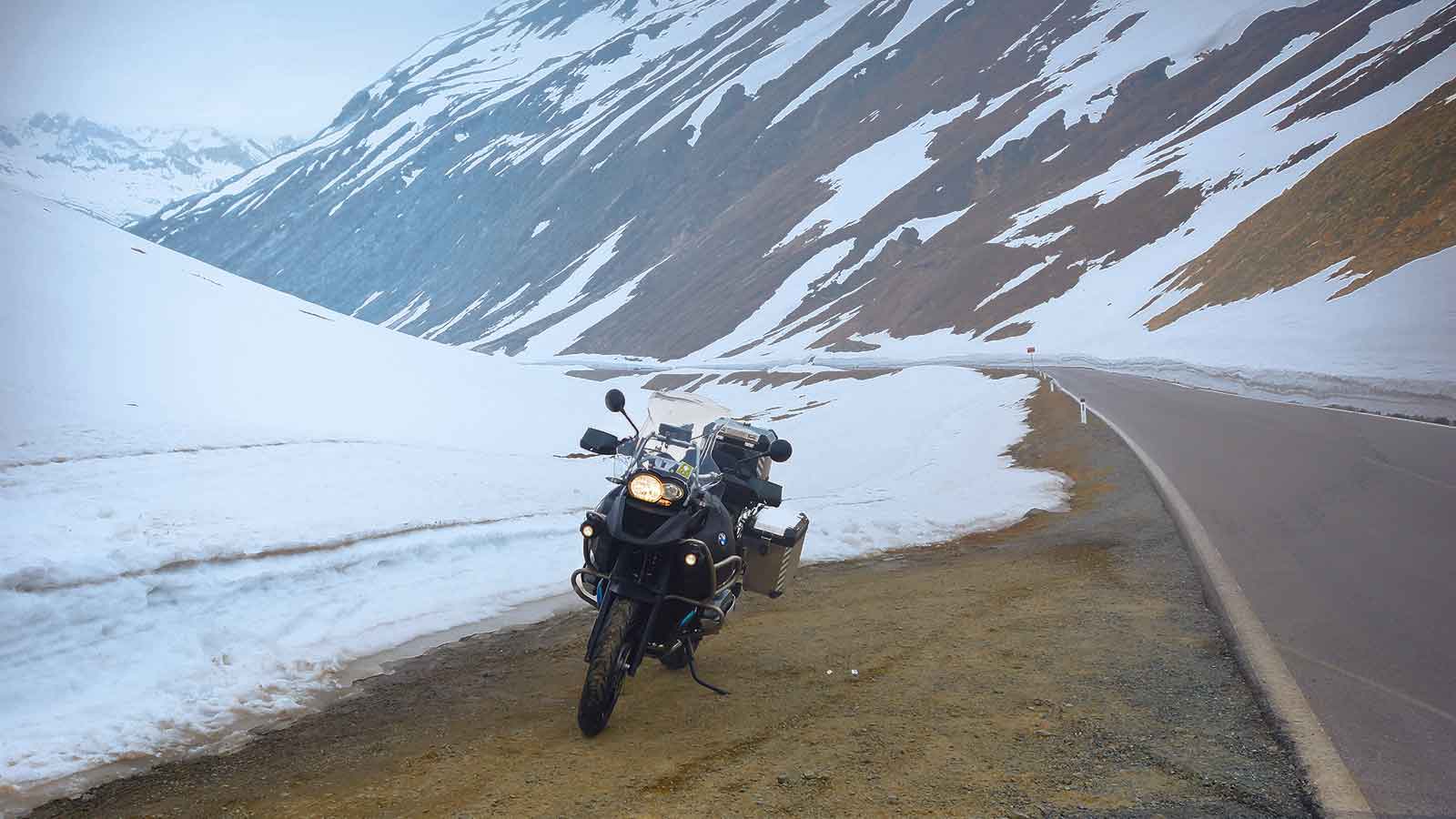
You don’t need a new jacket to ride in winter: change what you wear underneath. Your motorcycle jacket blocks the wind; a thermal set and a thin fleece provide the warmth.
Key points
- A thermal set and a thin fleece under your current jacket are often enough to ride through winter.
- Thermals go next to the skin, top and bottom, and never in cotton.
- The fleece should be thin, close-fitting, high-necked and hoodless.
- Added layers must not shift the protectors in your jacket.
Why the cold gets through a good jacket
Relative wind increases heat loss because cold air moves faster against the jacket. On a motorcycle, this airflow exists even on a still day. A thermometer gives the air temperature, but it doesn’t measure the effect of speed on exposed areas.
Hands, neck and wrists cool quickly when air rushes into the openings, and the chest takes the wind head-on. A well-closed jacket reduces this airflow, but it doesn’t replace proper gloves or neck protection.

The jacket blocks the wind; what keeps you warm is worn underneath
Your jacket is the windbreak; the layers underneath provide the warmth. The membrane and lining slow down air and rain, but on their own they don’t hold enough heat on a long ride. A well-closed mid-season jacket becomes a winter jacket if what you wear underneath does its job.
Layer 1: the thermal set, top and bottom
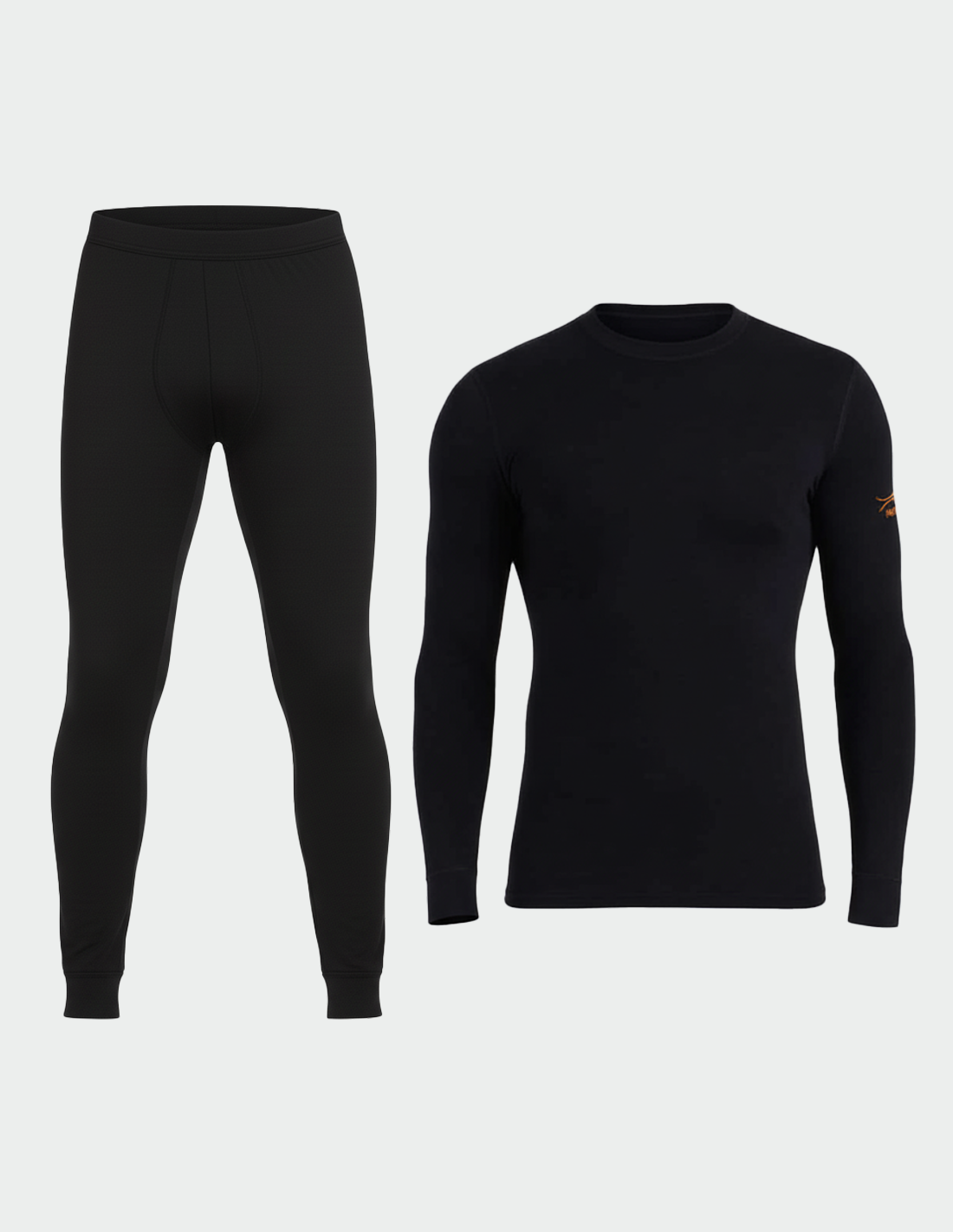
Directly against the skin, a long-sleeved top and long bottoms in merino wool or synthetic fibre. Its job is twofold: wick away the moisture your body produces and insulate. It goes next to the skin, never over a T-shirt, or the moisture can’t escape.
If moisture stays in the garment, it chills the rider during quiet moments: at a red light, in traffic, when stopping after a fast stretch. A base layer that wicks keeps the skin dry, and dry skin stays warm.
No cotton as a base layer: it absorbs sweat, holds on to it and chills you. A cotton T-shirt under the jacket is the most common mistake.
The bottom matters as much as the top. Your legs take the wind under your motorcycle trousers, especially at the knees and thighs. Thermal leggings under your trousers make more difference to the ride than an extra layer on your chest.
Layer 2: the fleece, thin and close-fitting
Over the thermal, a fleece. Its job: hold in the heat. Thickness isn’t what keeps you warm; still air trapped between thin layers is. A thick fleece, compressed by the jacket, pushes that air out and loses its insulating power.
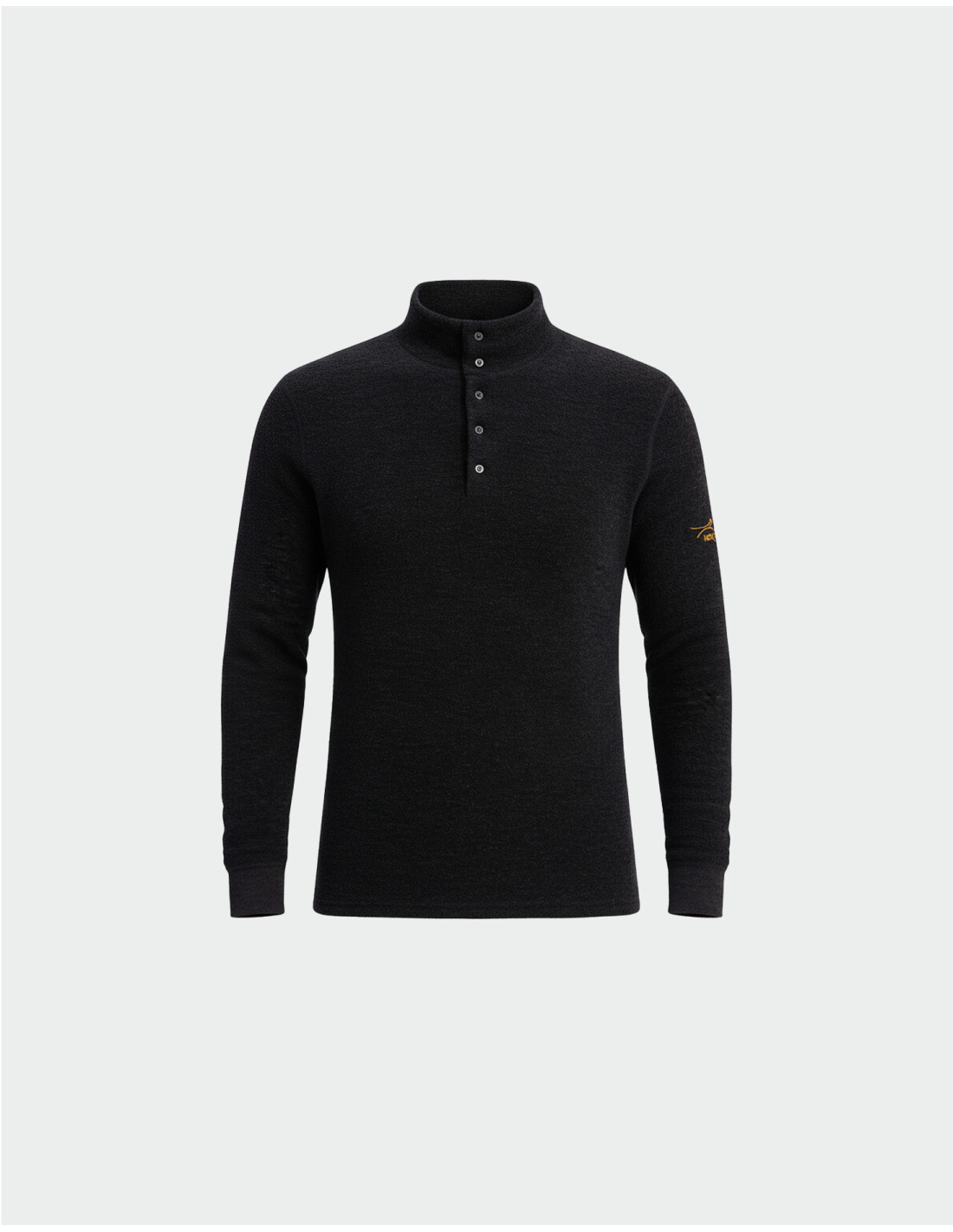
Choose a cut that fits under the jacket without bulk: thin, close-fitting, high-necked, without a hood. The collar seals the top of the jacket under the helmet; a hood bunches up at the back and on the nape. A zip-up model opens when you stop, without taking everything off.
For size, take your usual size, not one up: a fleece that is too loose forms folds that get compressed under the jacket. It should follow the thermal without tightening around your arms when you hold the handlebars.
What to wear by temperature
Choose your clothing for what you’re doing, not just for the temperature. Sitting on the motorcycle, you produce almost no heat, and speed adds wind. The guidelines below are a starting point.
| Conditions | Layer 1 | Layer 2 | Neck and hands |
|---|---|---|---|
| 0 to 10 °C | Norveg thermal set, top and bottom | Not needed | Neck warmer |
| 0 to −10 °C | Norveg −60 °C merino thermal top | Not needed | Neck warmer, glove liners |
| −10 to −20 °C | Norveg −60 °C merino thermal top | 3-layer technical microfleece | Neck warmer, glove liners |
Guidelines for road riding. On a motorway or a long ride, move down one row.
How to layer under a motorcycle jacket
Try on your jacket with the thermal and fleece underneath, sitting on the motorcycle or in a similar position. The sleeves shouldn’t ride up, the back shouldn’t pull at the shoulders, and the zip should close without forcing. If the jacket is tight, the layers lose their insulation: take off a layer rather than adding one.
A safety rule: added layers must not shift the protectors in your jacket. Elbow, shoulder and back protectors must stay in place with your arms bent and hands on the handlebars. Base layers keep you warm; they don’t replace an EN 17092 certified jacket or its protectors.
Neck, wrists, hands: the areas still exposed
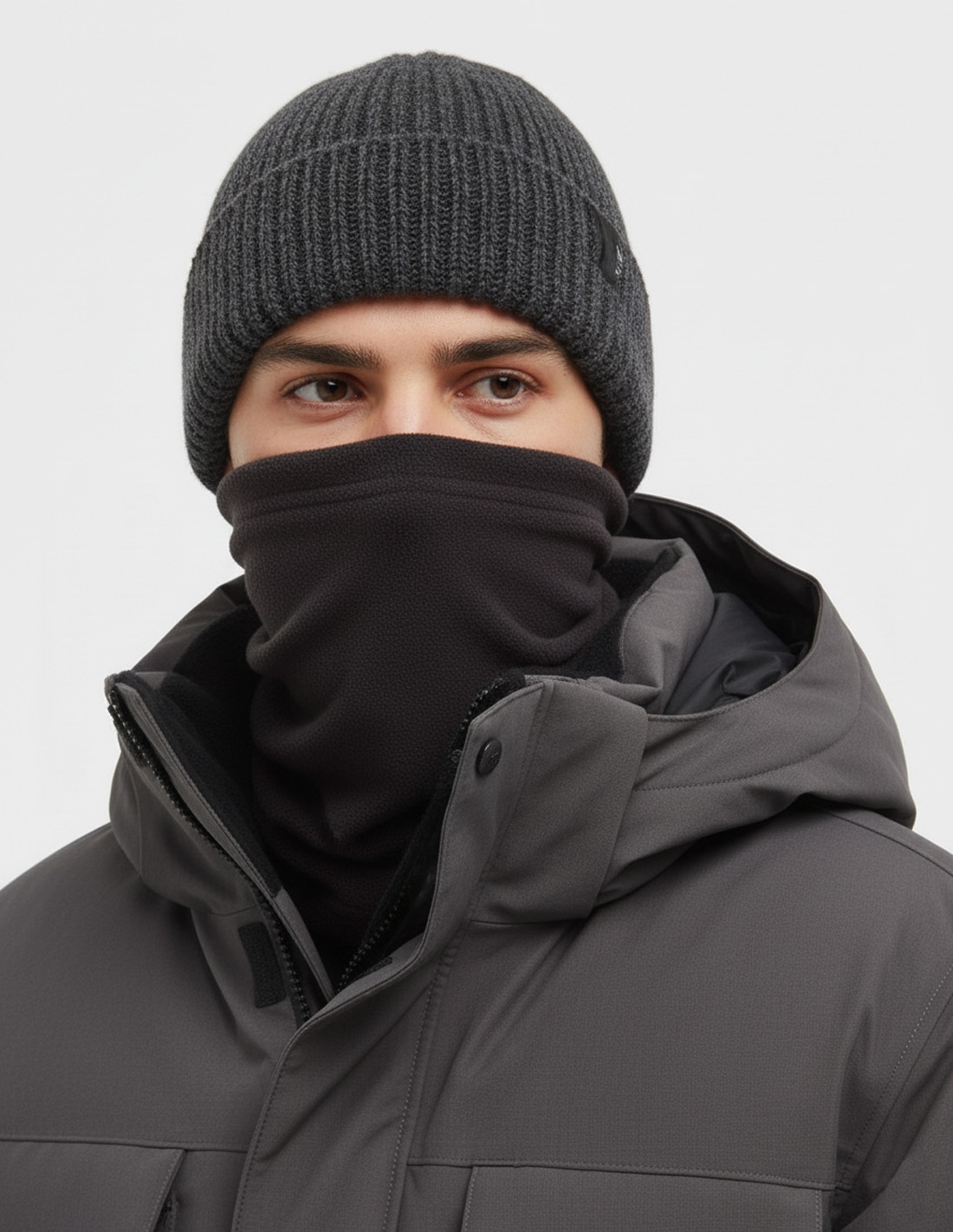
Even with good layers underneath, the cold comes in through the openings. At the neck, a thin neck warmer closes the gap between the jacket collar and the helmet. In very cold weather, a thin balaclava under the helmet also protects your face from the wind of speed.
At the wrists, the jacket sleeve should cover the glove cuff, or the other way round, with no gap when your arm is stretched out. Inside the gloves, thin glove liners add a layer without dulling the feel of the controls. Our guide to buying an extreme cold outfit explains the role of each layer according to your activity.
Caring for your thermals and fleece between seasons
Wash according to the label, without fabric softener: it leaves a residue on the fibres that hinders moisture wicking, on both thermals and fleece. Wash inside out with the zip closed to limit pilling on the fleece.
Merino wool needs little washing: use a wool cycle with a mild detergent and dry flat. Synthetic fibres and fleece dry in the air, away from direct heat. Store everything dry and folded, without heavy items on top.
The Grand-Froid under-jacket kit
What goes under your jacket comes down to five pieces: everything you need to ride through winter with the jacket you already own.


Frequently asked questions
What size fleece should I wear under a motorcycle jacket?
Your usual size, in a close-fitting cut. A fleece that is too big forms folds that get compressed under the jacket and insulate less. Try it on over your thermal, jacket zipped, arms stretched towards the handlebars: nothing should feel tight or ride up.
Are thermals and a fleece enough to ride at 0 °C?
At 0 °C on the road, a merino wool thermal top is often enough, provided your neck and wrists are sealed and you wear thermal bottoms under your trousers. On a motorway or a long ride, speed adds wind: add the microfleece and a balaclava under your helmet.
Can I wear a thick fleece under my motorcycle jacket?
It isn’t recommended. Compressed by the jacket, a thick fleece pushes out the insulating air and is less warm than a thin one. It can also shift the protectors. A thin fleece over a good thermal works better.
Do I also need thermal bottoms under my motorcycle trousers?
Yes. Your legs take the wind head-on, especially at the knees and thighs. Thermal leggings under your motorcycle trousers stop you having a warm upper body and cold legs for the whole ride.
Read next
Sources
- Grand-Froid, “10 Tips to Protect Yourself from the Cold”: tips no. 1 and 3.
- EN 17092 standard: protective garments for motorcycle riders.
- Grand-Froid product pages: Norveg, Guide Gloves and 3-layer technical fleece.