Sheepskin Trapper Hat Unisex Technoavia Yenisei 8.005 – Extreme Cold
Protection Extreme Cold
Membrane 6,000 mm / 6,000 g
Insulation Shelter® Micro 150 g/m²
Protection temperature down to −40 °C / −40 °F*
Sizes 54–64 cm (21.3–25.2 in)
Natural lining Sheepskin and flannel
The far-north trapper hat, lined with natural sheepskin
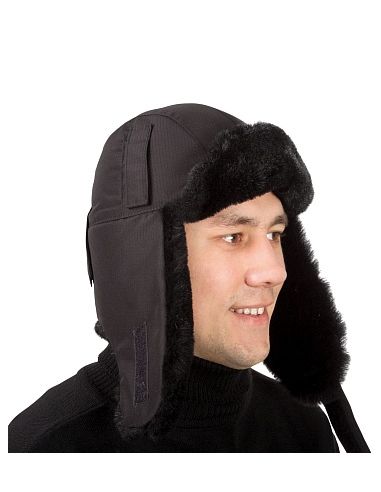
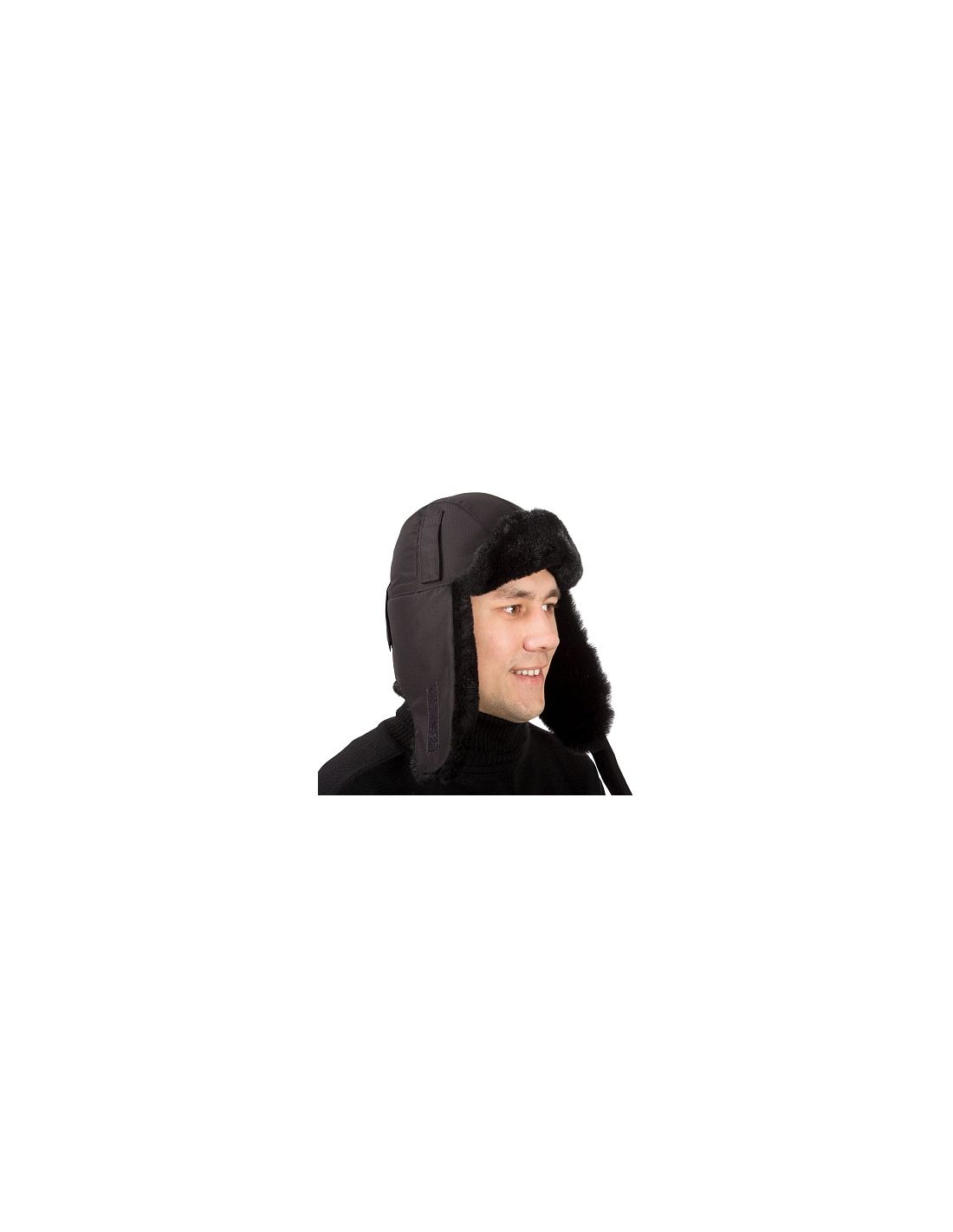
Protection given down to −40 °C / −40 °F*. The Yenisei brings together two insulation principles rarely found on the same trapper hat: a membrane fabric that stops wind and water, and natural sheepskin placed on every surface in contact with the skin. Across the crown and side panels, the lining switches to flannel. The front flap folds up, the earflaps join under a chin strap, and four external hook-and-loop straps also allow a safety helmet to be fitted when the job calls for one. Sizes 54–64 cm (21.3–25.2 in).
The Grand-Froid expert view
Where winter runs seven months, nobody picks their headwear for the look. They pick it because it holds up in wind and because it does not stiffen when the thermometer drops away. The Yenisei answers both. The fur sits exactly where the cold gets in — earflaps, nape, lower forehead — while the flannel keeps the scalp dry. And the membrane closes off the passage of air, which changes everything the moment it blows. The four hook-and-loop straps add an option for anyone wearing a helmet, without taking anything away from those who do not.
What is it for?
This trapper hat is aimed at long outdoor exposure in sub-zero temperatures, at work as much as on the move.
- Travel and stays in cold countries: Lapland, the Yukon, Siberia, where you stand outside without generating any effort — waiting, markets, transport
- Highways, utilities and outdoor callouts: standing at the roadside, slow movements, no warmth produced by the activity
- Farming, livestock and open barns: tending animals early in the morning, when the temperature reaches its lowest point
- Machine operation and unheated cabs: constant relative wind, stillness at the controls
- Static posts, gatehouse duty, surveillance: several hours without moving, the situation where heat loss through the head weighs heaviest
- Construction and civil works in winter: where a helmet is required, the hat straps underneath instead of being taken off
Thermal protection
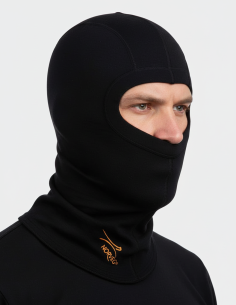
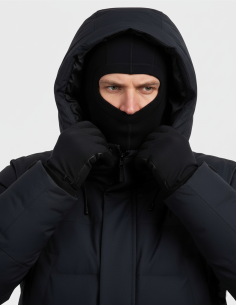
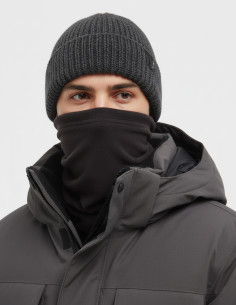
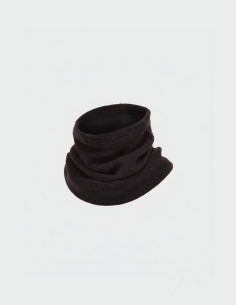
Insulation does not come down to a single material but to how it is distributed. The lower part of the hat — the area that takes the wind head-on and meets the collar — carries two layers of Shelter® Micro 150 g/m² (4.42 oz/yd²). The crown, earflaps and nape carry one, backed with natural fur. Over the top, the membrane blocks the passage of air: without it, wind would pass straight through the insulation and carry off the warmth it holds. That is the mechanism behind a thick but permeable beanie leaving you cold as soon as there is a breath of wind. What the hat does not cover, it does not protect: the face and chin stay exposed, and a balaclava or neck gaiter takes over as soon as the wind picks up.
Technical features
- Combined lining: flannel across the crown and side panels, sheepskin on the earflaps, the nape and the lower front flap
- Insulated chin strap: hook-and-loop loop stitched to the left earflap, hook tab on the right earflap
- Fold-up front flap held in the raised position by two press studs
- Four external hook-and-loop straps allowing a safety helmet to be fitted
- LT-membrane™: hydrostatic head 6,000 mm, breathability 6,000 g/m² per 24 h
- Windproof, breathable outer fabric with water-repellent finish, 180 g/m² (5.31 oz/yd²)
- Sizes 54–64 cm (21.3–25.2 in), unisex fit
Composition
- Outer fabric: POLYRIB-N, 100% polyamide, 180 g/m² (5.31 oz/yd²)
- Membrane: LT-membrane™, which stays supple in deep cold instead of stiffening
- Insulation: Shelter® Micro 150 g/m² (4.42 oz/yd²) — two layers in the lower section, one across the crown, earflaps and nape
- Lining: flannel
- Fur: natural sheepskin
How to wear it
Three configurations, depending on the temperature and on what the job requires.
- Flap raised, earflaps up: for the milder end of the range and short journeys — the flap locks onto its two press studs, the earflaps join by the chin strap above the crown
- Earflaps down, chin strap closed under the chin: the deep-cold configuration — the fur wraps the ears and nape, the flap comes down over the forehead and cuts the wind at eye level
- With a helmet, if the job calls for one: the four hook-and-loop straps fold onto the shell, which stays secured to the hat even when leaning over or working head down
Care & Durability
- Brush the fur dry, in the direction of the pile, after use in snow
- Clean the outer fabric by dabbing with a damp sponge, with no harsh detergent or solvent
- No machine wash, no spin, no tumble dryer: sheepskin withstands none of these
- Leave to dry in open air, away from a radiator or any direct heat source
- Store on a form or flat, somewhere dry and ventilated, without prolonged compression
Return or exchange — 30 days
You have 30 days from delivery to request a return or an exchange on this item.
Why choose the Yenisei trapper hat?
Because it handles cold, wind and damp through three distinct means rather than one: the fur holds warm air against the skin, the synthetic insulation builds the thermal volume, the membrane closes off the passage of air and water. It then adapts to the situation — flap up or down, on its own or under a safety helmet.
Why the head loses heat first:
- A permanently exposed surface: the head, neck, hands and feet account for most body heat loss — on a static post, that leak lasts as long as the exposure does
- A physiological reflex: faced with cold, the body narrows the peripheral blood vessels to protect the vital organs, so the extremities cool before the trunk, even when properly equipped
- A signal worth reading: hands and feet that stay frozen despite good equipment often point to heat escaping elsewhere, and the scalp tops the list
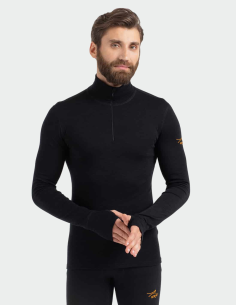
Covering the head properly improves comfort in the hands and feet: it is one thermal system, not two separate problems.
* Indicative temperature. Perceived warmth varies with activity, body type, humidity, wind and the base layers worn.