Severe Cold Safety Boot Rocket S3S — CXS
Protection Severe Cold
Insulation 3M Thinsulate 200 g
Safety S3S CI HRO
Thermal protection −25 °C / −13 °F*
3M Thinsulate 200 g Standing in the cold without feeling it
3M Thinsulate 200 g insulation and an outsole certified against cold
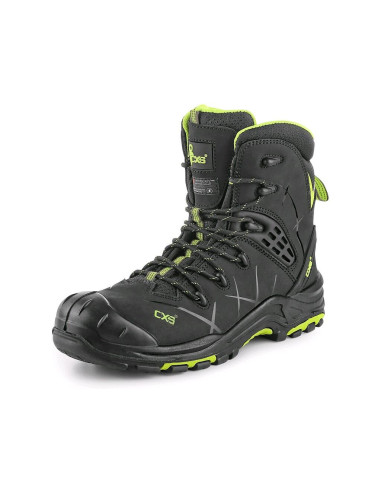
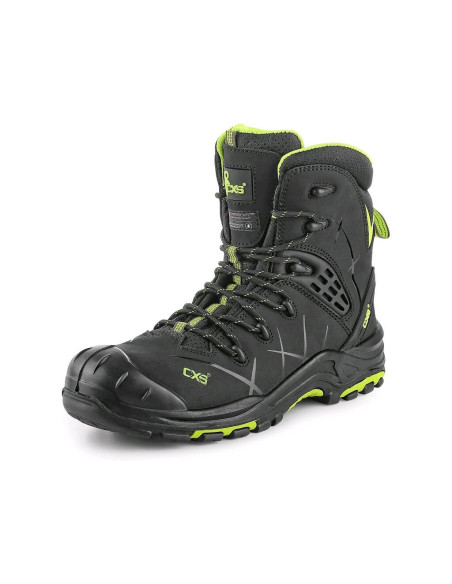
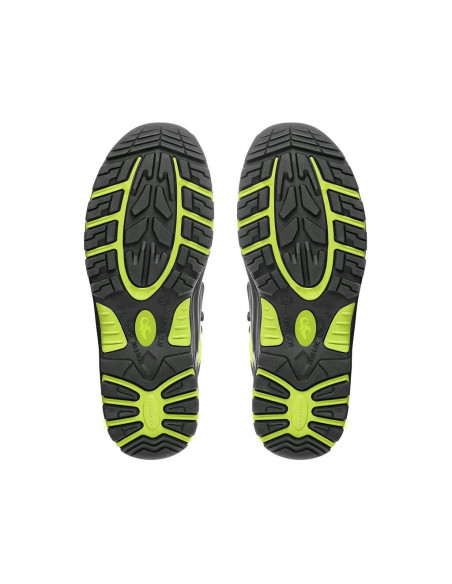
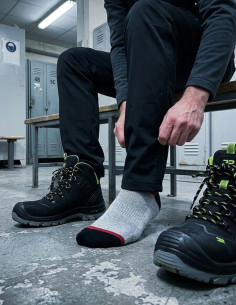
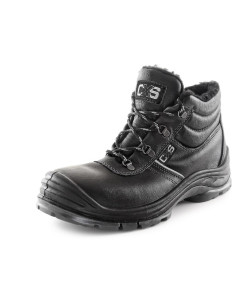
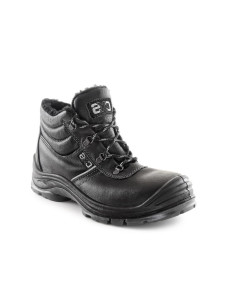
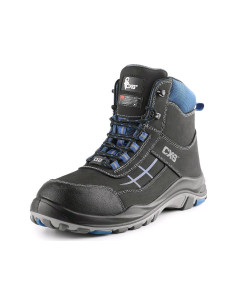
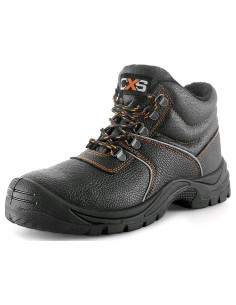
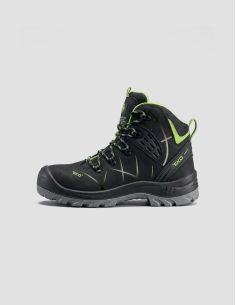
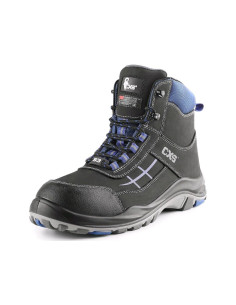
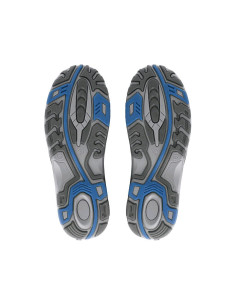
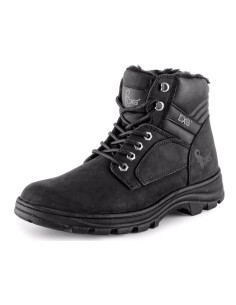
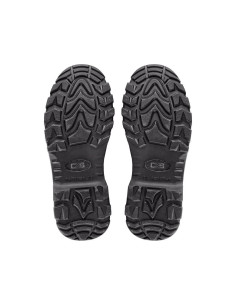
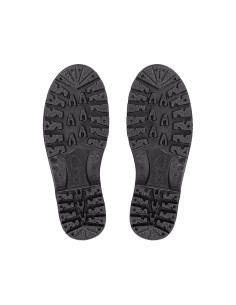
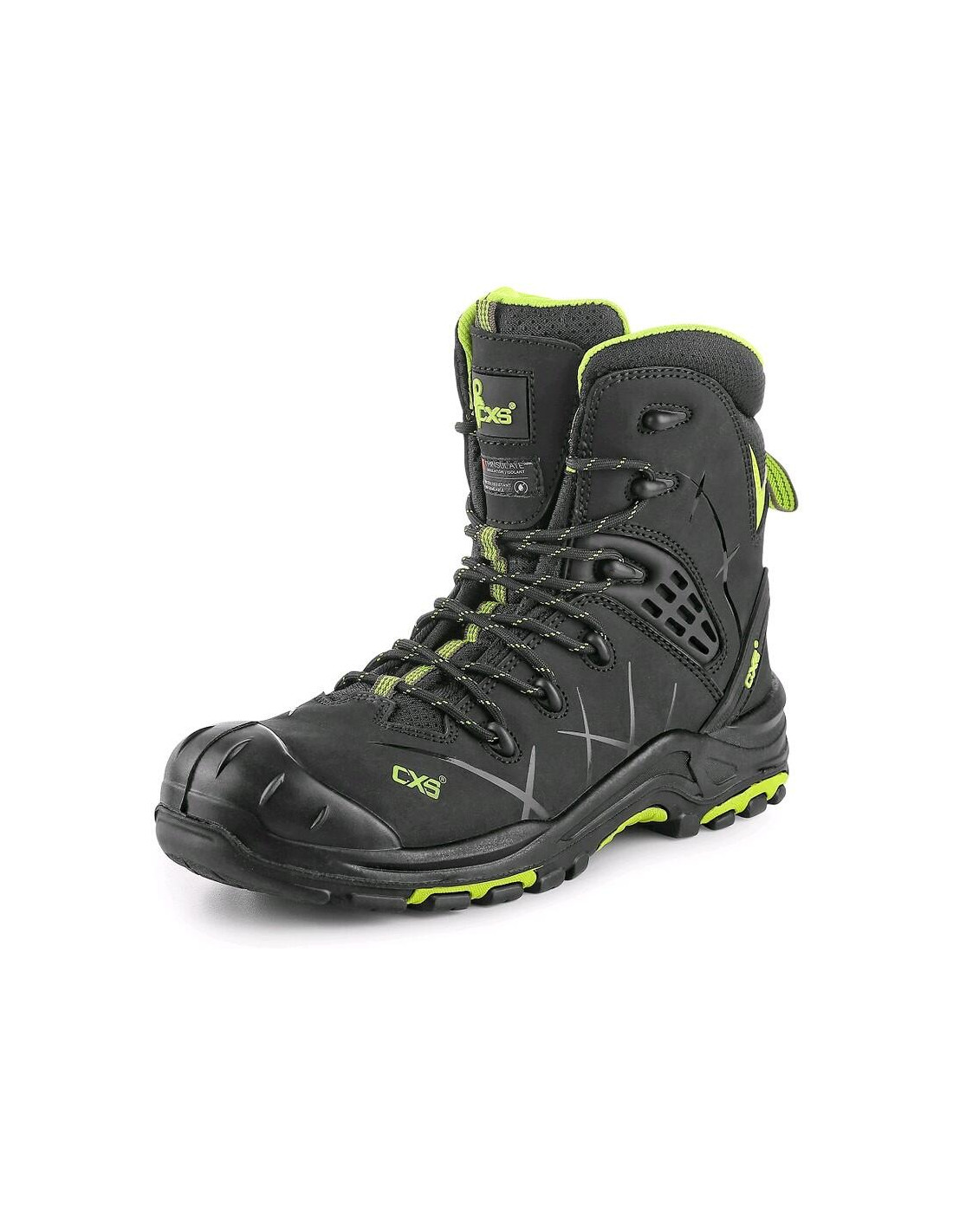
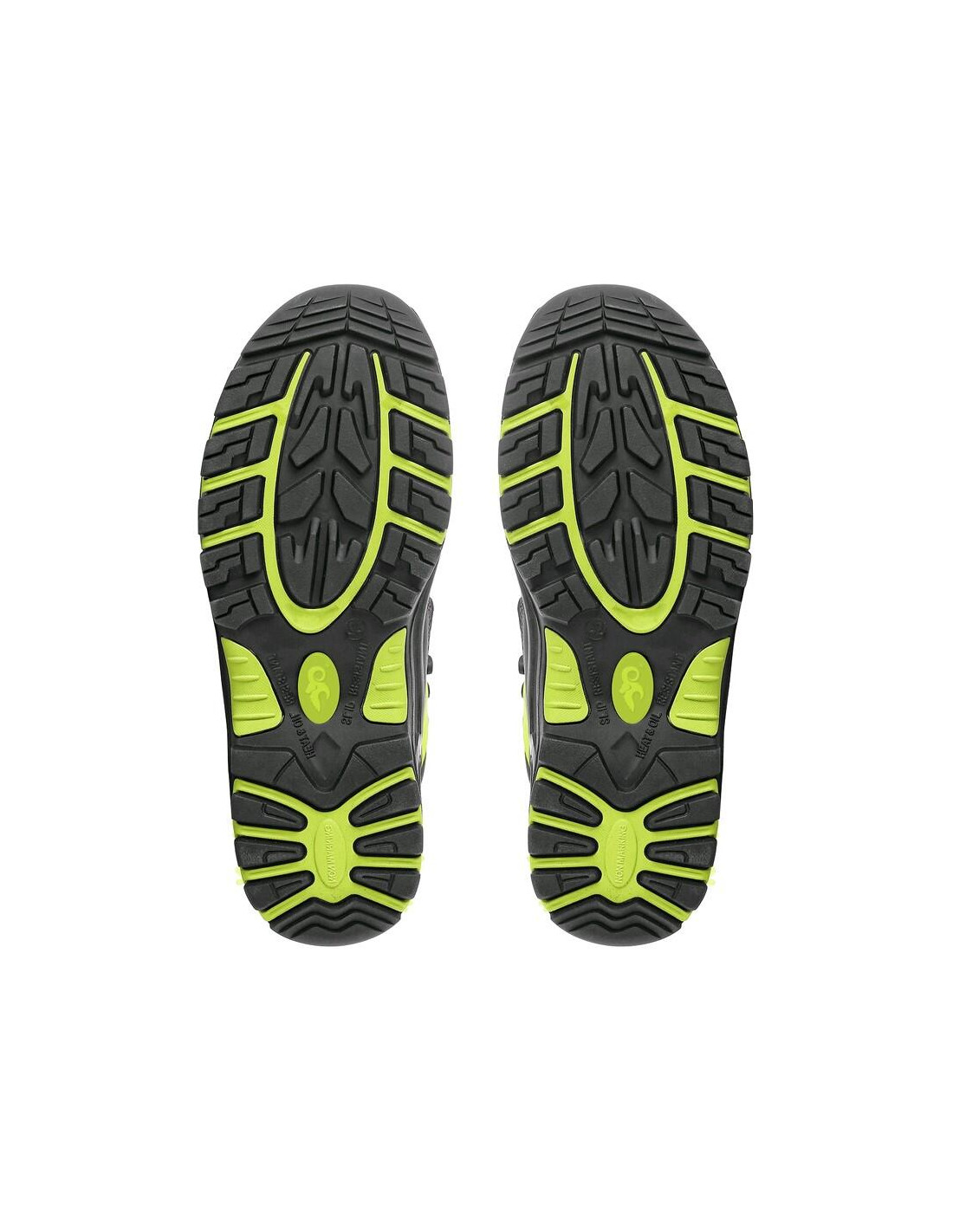
The Rocket S3S is an ankle-height safety boot built around its insulation. The 3M Thinsulate 200 g lining fills the whole inside, from heel to toes. The upper is water-repellent split nubuck, 1.6 to 1.8 mm thick, backed by a breathable, abrasion-resistant mesh lining. The PU/rubber outsole carries the CI marking, insulation against cold, and the HRO marking, resistance to contact with a hot surface up to 300 °C. It is antistatic, oil resistant and slip resistant. Added to that are a composite toe cap, a Dyna-Flex® penetration-resistant midsole, a reinforced heel and reflective details. Sizes 38 to 49.
Grand-Froid expert's view
Plenty of winter boots are warm as long as you keep walking. This one is made for the jobs where you don't: that is where the Thinsulate 200 g and the insulating outsole earn their place, and where the difference shows by the end of the day.
What is it designed for?
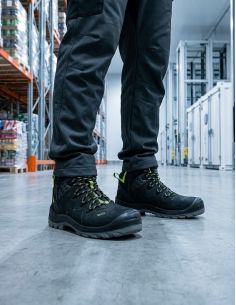
This boot is for jobs that keep you in the cold for hours, particularly standing still on ground that never warms up.
- Warehouses and the cold chain: order picking, refrigerated bays, cold rooms
- Winter sites: structural work, foundations, earthworks on frozen or snow-covered ground
- Fixed outdoor posts: security, reception, weighbridge, access control
- Roadworks and utilities: long call-outs, trenches, night repairs
- Industry and unheated workshops: days spent standing on concrete
Thermal protection
3M Thinsulate is a web of microfibres far finer than a conventional insulating fibre. The finer the fibres, the more of them there are in the same volume, and the more still air they trap — and it is that air that insulates, not the material itself. The consequence comes down to one thing: less thickness is needed. In a boot, where every millimetre taken from the inside is paid for in comfort, that changes everything, and it is why this insulation has become the standard on winter models.
200 g is the heaviest of the three weights commonly used in work footwear, above 100 and 150. It is the one you pick when you stand still rather than move about, and here it fills the whole boot, upper included.
The second front is the ground. An outsole can be thick and still let the cold through; this one carries the CI marking, which is not a claim but a test: the whole boot spends thirty minutes at −17 °C / 1 °F, and the temperature inside must not drop by more than 10 °C. The water-repellent nubuck closes the third front, moisture, which drains an insulation of its effect as soon as it reaches the fibres.
Specifications & Composition
- Insulation: 3M Thinsulate lining, 200 g weight
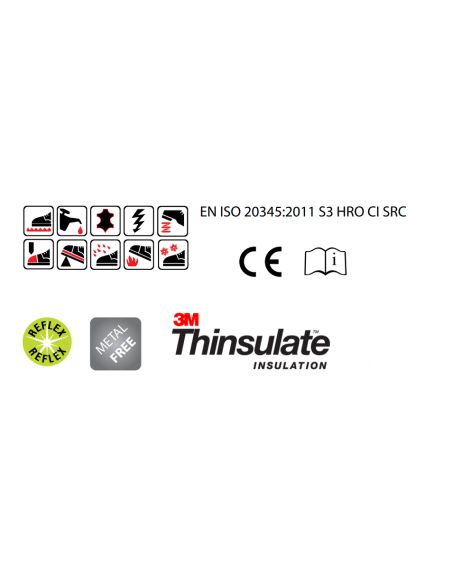
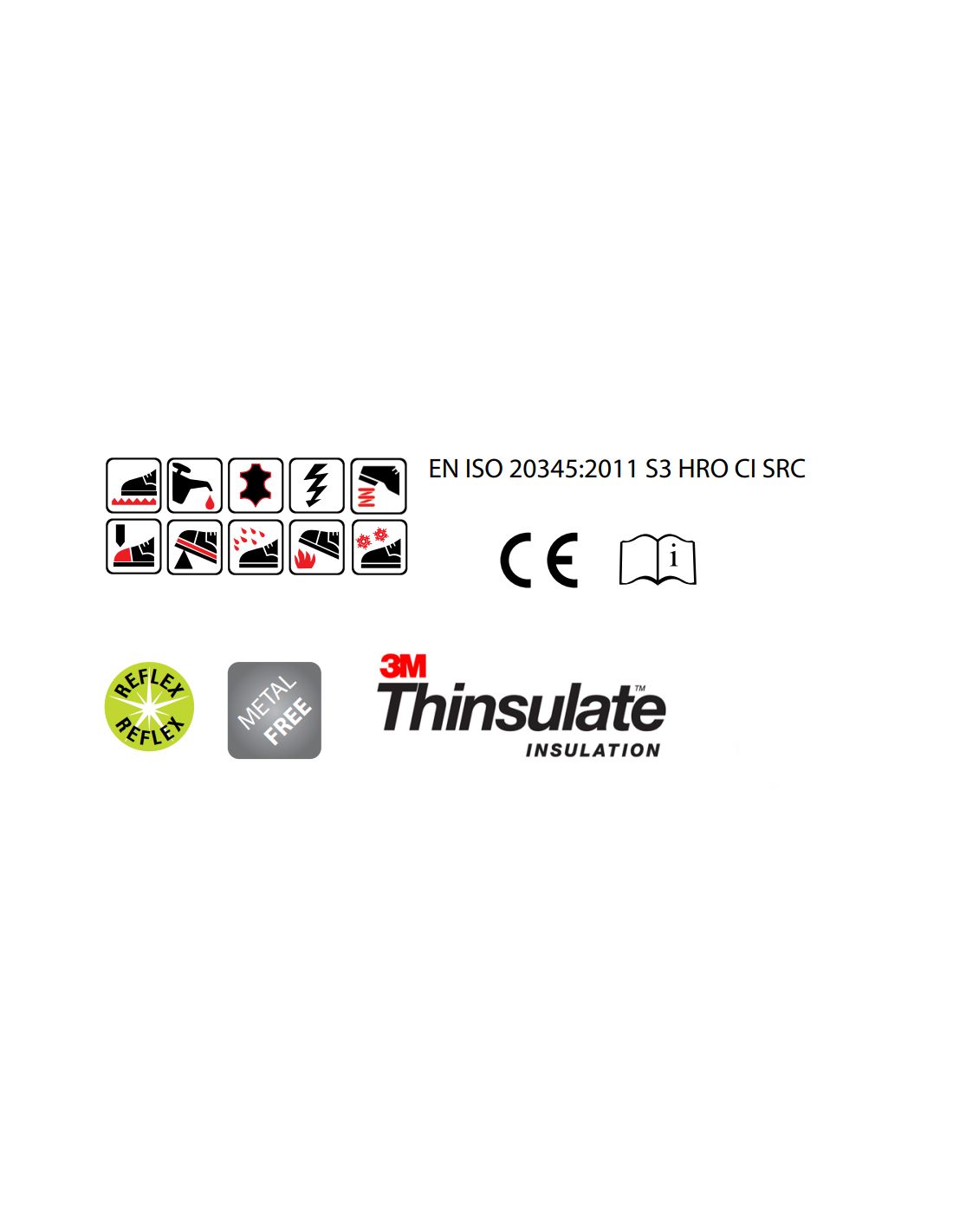
- Standard: EN ISO 20345:2022+A1:2024, class S3S FO SC SR CI HRO
- CI — outsole insulation against cold
- HRO — outsole resistant to contact with a hot surface up to 300 °C
- SC — abrasion-resistant scuff cap · FO — oil-resistant outsole
- Upper: water-repellent split nubuck, 1.6 to 1.8 mm
- Lining: breathable, abrasion-resistant mesh
- Composite toe cap and Dyna-Flex® penetration-resistant midsole
- PU/rubber outsole, antistatic and slip resistant
- Reinforced heel and reflective details
- Weight: 801 g per half pair in size 43
Size guide
Take your usual size. The Thinsulate insulation is thin and does not eat into the space inside. The table gives the length and width of the insole: measure your foot flat on a sheet of paper, from heel to longest toe, and take the size whose length exceeds yours by about a centimetre.
| Size (EU) |
38 |
39 |
40 |
41 |
42 |
43 |
44 |
45 |
46 |
47 |
48 |
49 |
| Insole length (cm) |
24.7 |
25.3 |
26.0 |
26.7 |
27.3 |
28.0 |
28.7 |
29.3 |
30.0 |
30.7 |
31.4 |
32.0 |
| Insole width (cm) |
8.8 |
8.9 |
9.0 |
9.1 |
9.2 |
9.3 |
9.4 |
9.5 |
9.6 |
9.7 |
9.8 |
9.9 |
Width measured at two thirds of the insole length. Actual dimensions may vary by 0.5 to 1 cm depending on production.
Care & Durability
- Brush the nubuck dry, with a soft-bristled brush, to lift off soil and dust
- Bring the nap back with a nubuck eraser on the areas rubbed shiny
- Apply a nubuck waterproofing spray after each cleaning, to keep the upper water repellent
- Dry at room temperature in an airy room, away from a radiator or a stove — direct heat stiffens the leather and weakens the bonding
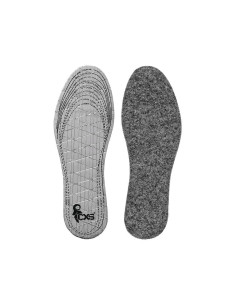
- Take the sockliner out in the evening and leave the boot open, so the insulation dries between two days
- Keep away from rich creams and greases, which clog the nap and turn nubuck into smooth leather
Return or exchange — 30 days
You have 30 days after receipt to request a return or exchange for this item.
Why choose the Rocket S3S boot?
Because the insulation is the starting point here, not an option added at the end of the design. The Thinsulate 200 g fills the whole boot, the outsole has passed the test for insulation against cold, and the water-repellent nubuck keeps moisture away from the fibres. It is the three together that let you stand in the cold for a full day.
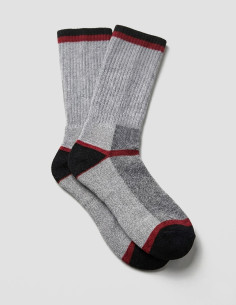
* Indicative temperature. Perceived warmth varies with activity, body type, humidity, the ground and the socks worn.